

Cultural places in Thrissur that show Kerala’s temple, art and festival traditions
Thrissur is Kerala’s cultural and spiritual capital. When I visited, I realised just how deeply this city abides by its local traditions every single day. One road leads to an ancient temple, another to a Kathakali performance hall, and somewhere in the distance, you hear the sound of chenda drums.
While planning the trip, I spent quite a bit of time checking hotels in Thrissur because I wanted to stay close to the cultural spots rather than being too far outside the city. That genuinely helped because most of the important places are spread around central Thrissur and nearby heritage areas.
Visiting Vadakkunnathan Temple in Thrissur
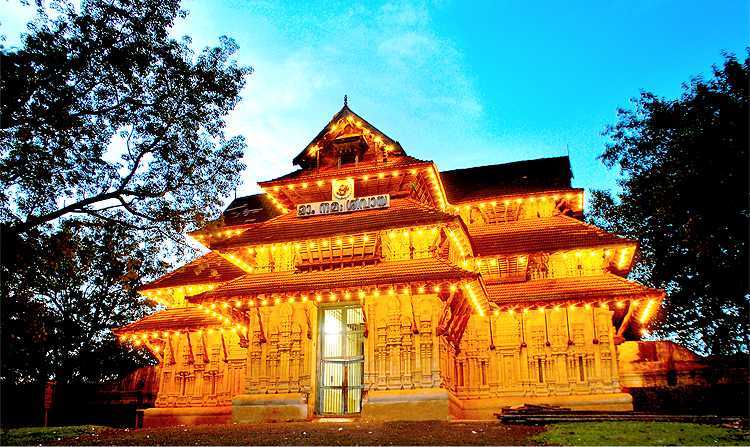
Entering the Vadakkunnathan Temple genuinely encouraged me to stop and pause a little in my otherwise packed itinerary. The temples in southern India tend to be significantly large. They also tend to have a very colourful entrance and distinct architectural styles. However, Vadakkunnathan Temple is much smaller, but the temple has the same traditional look and feel. Classic Kerala architecture looks beautiful anywhere. However, I particularly appreciated the tiled roofs, the wooden architecture, and the pathways illuminated by lamps as I walked around.
I was amazed by how beautiful the murals that decorated the walls inside the temple were. I often found myself examining the murals of the Mahabharata for longer than I had planned to, as they are still very bright and vivid, despite having been painted so many years ago.
I was impressed with how, even though the temple has become a tourist attraction, it is still very much a working temple and a place of worship. Vadakkunnathan Temple is also the home of Thrissur Pooram, Kerala’s largest temple festival.
Watching Kerala’s classical arts at Kerala Kalamandalam
One of the best decisions I made was visiting Kerala Kalamandalam near Thrissur. If someone genuinely wants to understand Kerala’s traditional art forms, this place is essential.
I watched students practising Kathakali expressions, and it honestly left me enthralled. Every eye movement, facial expression and hand gesture carried meaning, making the entire practice look unbelievably disciplined. I also saw Mohiniyattam dancers rehearsing while percussion rhythms echoed from another part of the campus.
Exploring Thrissur Archaeological Museum in Thrissur
I almost passed on visiting the Thrissur Archaeological Museum. I’m glad I didn’t, because this museum was key to helping me understand what made Thrissur such an important part of Kerala’s culture.
There were many temple artefacts, bronze sculptures, ancient coins, and mural fragments that were directly connected to the history and rituals of Kerala within the museum. If you appreciate discovering the stories behind temples and local customs, you will find these exhibits extremely fascinating.
What impressed me the most was how closely related artistic expression and religion are throughout Kerala’s history. Most of the decorative objects I observed in the museum demonstrated a connection between the temple and the city’s deeply rooted spiritual practices.
Visiting Shakthan Thampuran Palace in Thrissur
In addition, I visited the Shakthan Thampuran Palace, which was another layer of cultural identity for the city. This architectural combination of Kerala and Dutch styles is uniquely different from the temples scattered throughout Thrissur.
The inside was filled with royal artefacts, traditional household items from former rulers and plenty of old furniture. For me, the actual building was far more interesting than what was on display. Its wooden-capped ceilings, courtyards and tiled sections made it seem very elegant but not pretentious.
Ultimately, this helped me comprehend how Thrissur became such a significant cultural and festival centre throughout history.
Experiencing Thrissur beyond temples and festivals
I personally enjoyed that the cultural experience in this part of India felt natural, authentic, and rooted in spiritual traditions.
The temples still shape the rhythm of the city, the classical arts are still taught and practised as a serious discipline, and festivals are still real, emotional community gatherings and not merely tourist attractions. As a result of these features, Thrissur is a much more interesting place to visit than your everyday heritage site.

